What to Do After a Car Accident in Florida
The eight things to do in the minutes and days after a Florida crash — in order — to stay safe, protect your health, and keep your insurance and legal options open.
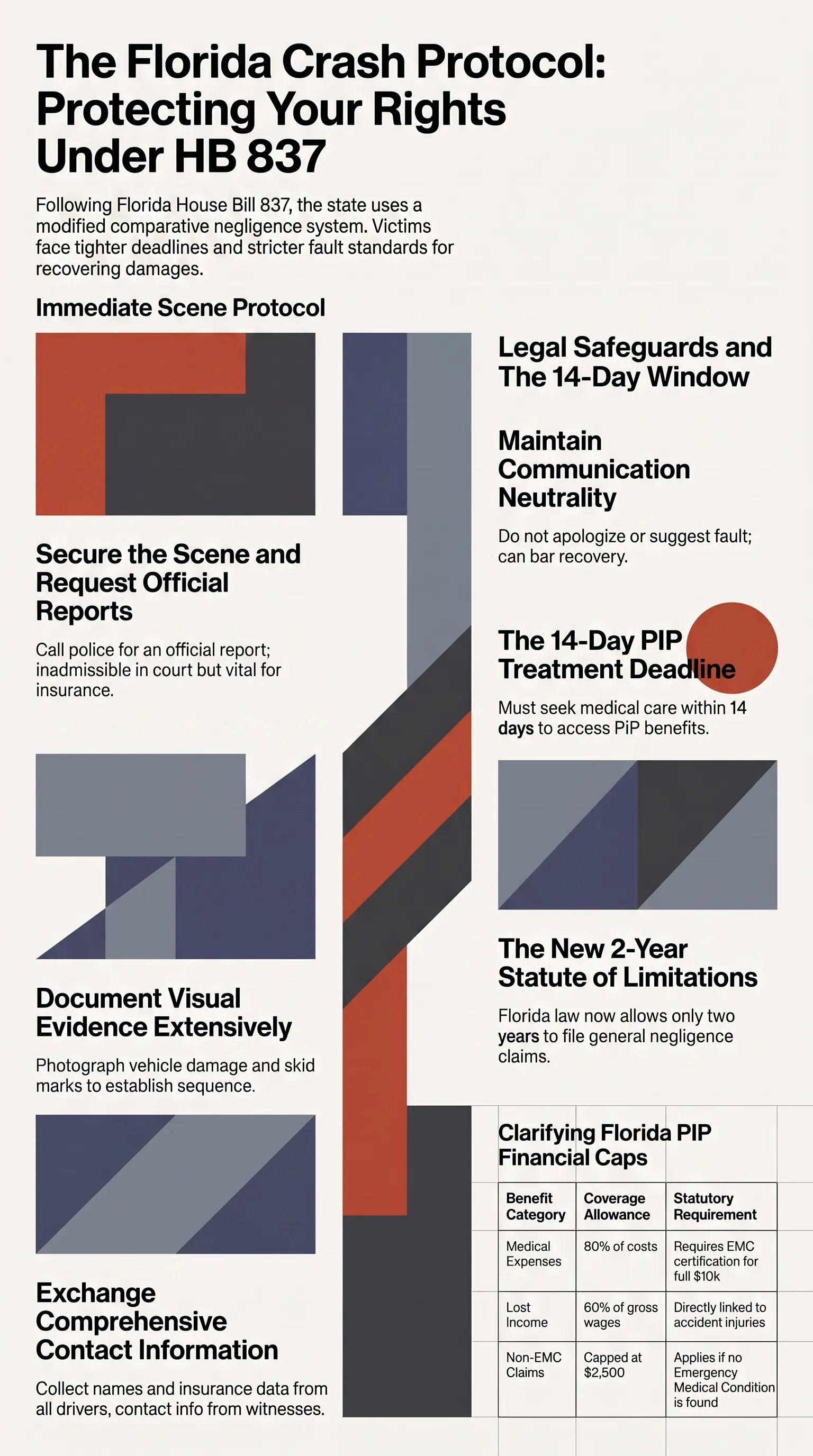
A crash is disorienting, and the choices you make in the first minutes and days genuinely shape what happens next — your health, your insurance claim, and your legal options. Here's what to do, in order. You can work the same list at the scene, tap by tap, in the scene checklist.
The 8 steps
- Get to safety and check for injuries. If the cars are drivable and it's safe, move them out of the travel lanes and turn on hazards. Check yourself and everyone else for injuries before anything else.
- Call 911 and get a police report. Call police to the scene if anyone is hurt or the damage looks significant. A crash report is powerful evidence later — and Florida requires reporting for injury, death, or apparent damage around $500 or more.
- Photograph everything. Take wide shots and close-ups of all vehicles, the damage, license plates, final resting positions, skid marks, road signs, traffic signals, and any visible injuries. More is better.
- Exchange information and find witnesses. Get the other driver's name, license, insurance company and policy number, plate, and phone. Collect names and numbers of any witnesses before they leave.
- Say little — don't admit fault. Be polite and factual. Don't apologize or speculate about blame at the scene; under Florida's comparative-negligence rule, your share of fault reduces (or, above 50%, erases) your recovery.
- See a doctor within 14 days. Adrenaline hides injuries. Florida's no-fault system only pays your PIP medical benefits if you're seen within 14 days of the crash — miss it and you can lose all $10,000.
- Report the crash to your insurer. Notify your own insurance company promptly, stick to the facts, and keep a claim number. Prompt notice is usually a policy requirement.
- Start a file and watch the deadline. Keep the report, photos, medical bills, and repair estimates together. For crashes on or after March 24, 2023, you generally have two years to file a negligence lawsuit.
What to capture at the scene
If you remember nothing else, get these: photos of every vehicle and the whole scene, the other driver's insurance card and license, the plate, and witness contacts. The exchange-info tool walks you through collecting exactly what a claim needs, and stores it on your device.
Why the 14-day rule is the one deadline not to miss
Florida is a no-fault state: your own Personal Injury Protection (PIP) pays first, up to $10,000 — but only if you get initial care within 14 calendar days. If a qualified provider also documents an emergency medical condition, you keep the full $10,000; without one, PIP is capped at just $2,500. When in doubt, get checked. The get-care tool helps you find the right kind of provider in time.
What not to do
- Don't leave the scene of an injury crash — that's a serious offense.
- Don't admit fault or agree to "handle it off the record" without a report.
- Don't skip medical care because you feel okay.
- Don't give a recorded statement to the other driver's insurer before you understand your claim.
Frequently asked questions
What should I do immediately after a car accident in Florida?
Get to safety and check for injuries, call 911 if anyone is hurt, and call police so there's a crash report. Then photograph the scene, exchange information with the other driver, avoid admitting fault, and get medical care within 14 days to protect your PIP benefits.
Do I have to call the police after a car accident in Florida?
You must report a crash that causes injury, death, or apparent property damage of roughly $500 or more. If a law-enforcement officer doesn't investigate at the scene, Florida generally requires the driver to file a written crash report within 10 days. When in doubt, call — the report is valuable evidence.
Should I go to the doctor even if I feel fine after a crash?
Yes. Adrenaline can mask whiplash, concussions, and soft-tissue injuries for days. Florida's no-fault system only pays your PIP medical benefits if you get initial care within 14 days of the accident, so get evaluated even if you feel okay.
What information should I exchange after a car accident?
Get the other driver's full name, driver's license, insurance company and policy number, license plate, and phone number, plus the make, model, and color of their vehicle. Also collect the names and phone numbers of any witnesses before they leave.
Should I admit fault at the scene of a Florida car accident?
No. Stay polite and factual, but don't apologize or guess about who caused the crash. Florida uses modified comparative negligence, so your percentage of fault reduces your recovery — and if you're found more than 50% at fault, you recover nothing.
How long do I have to report a car accident in Florida?
If no officer investigates at the scene, the driver generally must submit a written report within 10 days. Separately, the deadline to file a negligence lawsuit for crashes on or after March 24, 2023 is two years from the accident under HB 837.
What if the other driver has no insurance?
Your own PIP still pays your initial medical bills and lost wages regardless of fault. If you carry uninsured/underinsured motorist (UM/UIM) coverage, it can cover injuries the at-fault driver can't pay for. Report the crash and document everything.
Do I need a lawyer after a Florida car accident?
Not always — minor crashes with no injuries often don't require one. But if you were injured, fault is disputed, or an insurer is delaying or lowballing, a consultation is worth it. Many Florida injury lawyers offer free consultations and work on contingency.
Put this to work on your own case
Free, private tools that track your Florida deadlines, estimate what you'd actually keep after fees, and draft your claim — no account, nothing leaves your phone.
Start here
Related guides
Related reports
This is general information about Florida law, not legal advice. Every crash is different — for advice about your situation, talk to a licensed Florida attorney. Reviewed August 9, 2026.