Crashes Involving Uber, Lyft & Delivery Drivers in Florida
A crash with a rideshare or gig-delivery driver isn't a normal fender-bender — there may be a $1,000,000 commercial policy behind it, or almost nothing, depending on one detail: whether the app was on. Here's how the coverage works and what to do.
You get rear-ended at a light. The other driver hops out, apologizes, and mentions they were 'just finishing an Uber' or 'on a DoorDash run.' That one sentence changes everything about your claim — because a crash involving a rideshare or delivery driver can sit on top of a $1,000,000 commercial insurance policy... or almost nothing at all. Which one you're dealing with comes down to a single detail most people never think to check: what the app was doing at the moment of impact.
This guide walks through how Uber, Lyft, and delivery-app insurance actually works in Florida, what to do at the scene to lock in the right coverage, and why these cases are worth taking seriously. It's educational, not legal advice — but rideshare and delivery crashes are now common enough in Florida that knowing this can be worth a great deal of money.
Why these crashes are different
A normal Florida crash runs into the state's hard truth: drivers here aren't required to carry any bodily-injury liability coverage (see our guide on uninsured motorist coverage). Rideshare crashes can be the opposite. Under Florida's Transportation Network Company law, Uber and Lyft are required to carry substantial coverage while their drivers are working — so instead of chasing an uninsured individual, you may be dealing with a million-dollar policy and a professional claims department.
This isn't rare anymore. When we analyzed a year of injury lawsuits in Hillsborough County (Tampa), the biggest commercial defendants weren't trucking companies — they were the gig platforms. Uber-related entities appeared in roughly 63 serious injury suits, Lyft in about 21, with Amazon Logistics and DoorDash close behind. (Full breakdown in our Crash Data Journalism report.) Rideshare and delivery vehicles have become a leading commercial cause of crash litigation in the state.
Rideshare coverage: it's all about the app
Florida law (section 627.748) sets tiered insurance requirements for Uber and Lyft based on exactly what the driver was doing. Think of it as three periods:
| App status | Who pays | Coverage limit |
|---|---|---|
| Period 0 — app off | Driver's personal auto policy only | Personal limits (may be $0 bodily injury) |
| Period 1 — app on, waiting for a request | Company contingent liability | $50,000 / $100,000 / $25,000 |
| Periods 2–3 — en route to pick up or passenger on board | Company commercial liability | $1,000,000 |
Period 0 — App off
The driver is off the clock, using their car personally. Only their personal auto policy applies — and that's subject to all of Florida's normal gaps, including the possibility of no bodily-injury coverage at all. The rideshare company's coverage does not apply.
Period 1 — App on, waiting for a request
The driver is logged in and available but hasn't accepted a ride yet. The company must carry contingent liability coverage of at least $50,000 per person / $100,000 per crash for bodily injury, and $25,000 for property damage. This fills gaps in the driver's personal policy but is far smaller than the trip coverage.
Periods 2 & 3 — En route to pick up, or passenger on board
Once the driver has accepted a ride and is heading to the rider, or has a passenger in the car, the big policy kicks in: at least $1,000,000 in liability coverage. This is the window where serious claims are covered by a real commercial policy.
So the same driver, in the same car, can have three completely different insurance situations within a single hour. Establishing which period applied at the moment of the crash is the whole ballgame — and it's provable from the app's trip records.
If you were the Uber/Lyft passenger
Good news if you were riding: when you're a passenger in an Uber or Lyft, you're squarely in Period 3, so the company's $1,000,000 coverage generally applies to your injuries — and it doesn't matter whether your rideshare driver or the other driver caused the crash. The coverage also typically includes uninsured/underinsured motorist protection, which matters if the other driver was at fault and had no insurance. Your first steps: get medical care, report the crash through the app, and save your trip receipt.
Delivery apps are a different, thinner world
People assume delivery apps work like Uber. They mostly don't. Coverage varies a lot by platform and is usually much narrower:
- Amazon Flex: Amazon provides commercial auto liability (reported at $1,000,000) while a driver is actively delivering Amazon packages — but not when the app is off.
- Amazon Logistics / DSP vans: the branded vans are driven by employees of Amazon's Delivery Service Partners and are covered by commercial fleet policies — a different, generally well-insured situation.
- DoorDash, Uber Eats, Instacart, Grubhub: these typically provide some liability coverage only during an active delivery (food picked up, en route to you), and often on a contingent basis behind the driver's own policy. Between orders, you may be back to just the driver's personal insurance.
The lesson: with delivery crashes you have to pin down not just whether the app was on, but whether the driver was mid-delivery — and which company's policy sits behind that moment. Don't assume there's a big policy, and don't assume there isn't.
Your PIP still comes first
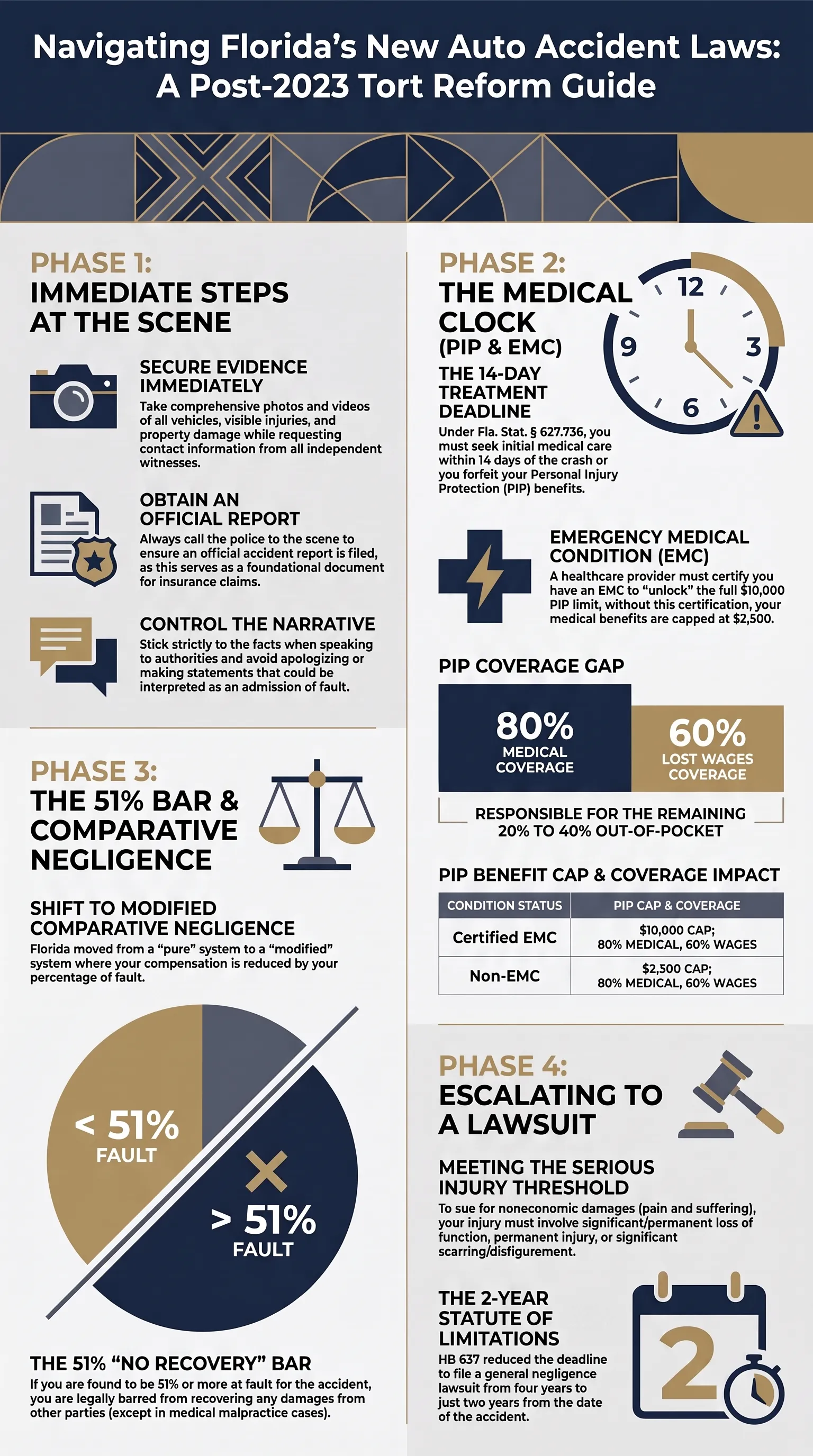
Whatever the other side's coverage, remember Florida's no-fault basics: your own PIP pays first for your injuries — 80% of medical bills and 60% of lost wages, up to $10,000, regardless of who caused the crash. If you were a passenger without your own PIP, coverage may come from the vehicle you were in or another household policy. PIP is the floor; the rideshare or delivery policy is what you reach for above it, especially for pain and suffering, which PIP never covers.
What to do at the scene of a rideshare or delivery crash
- Get safe and get medical help. Injuries first, always. And remember Florida's 14-day rule: you generally must be seen by a medical provider within 14 days for PIP to pay.
- Call the police and get a crash report. The official report documents the parties and often notes the rideshare/delivery involvement.
- Capture the app status. This is the step unique to these cases. Ask the driver — politely — whether the app was on and whether they were mid-trip or mid-delivery. Photograph their phone screen if they'll allow it. Note the company (Uber, Lyft, Amazon, DoorDash, etc.).
- Save your own trip records if you were the rider. Screenshot the trip receipt, driver name, and times.
- Report it in the app. Uber and Lyft have in-app crash reporting that triggers their insurance process. Do this promptly.
- Photograph everything: vehicles, positions, license plates, any delivery bags or company decals, and the scene.
- Don't give a recorded statement to the company's insurer before you understand your claim. Be factual with police; be cautious with adjusters.
Why these claims can be worth pursuing
Because a working rideshare crash may be backed by a $1,000,000 policy, the recovery ceiling for a serious injury is far higher than in a typical Florida crash — but the companies defend these claims with experienced adjusters and law firms, and they will work hard to argue the driver was in a cheaper coverage period (or off the app entirely). That combination — real money available, but a sophisticated opponent — is exactly the situation where solid documentation and, for a significant injury, professional representation pay off.
Deadlines
Under HB 837, most Florida negligence claims now carry a 2-year statute of limitations from the date of the crash. Rideshare and delivery cases also depend on records that the companies control and that don't last forever, so the practical deadline to start gathering evidence is 'immediately.' If your injuries are more than minor, talk to a licensed Florida attorney early — before app data and coverage questions get harder to pin down.
The bottom line
A crash with an Uber, Lyft, Amazon, or DoorDash driver can be the best-insured or worst-insured crash you'll ever have, and the deciding factor is what the app was doing at impact. Document that detail, protect your PIP, and don't let a company adjuster quietly define the coverage period for you. For a serious injury, these are among the most valuable — and most contested — claims on Florida's roads.
This guide is educational and not legal advice. Insurance terms and company policies change; for advice about your specific situation, consult a licensed Florida attorney.
Frequently asked questions
Does Uber or Lyft insurance cover me if their driver hit me in Florida?
It depends on the driver's app status. If the driver had accepted a ride or had a passenger (Periods 2–3), a $1,000,000 commercial liability policy generally applies. If the app was on but they were only waiting for a request (Period 1), a smaller contingent policy applies ($50k per person / $100k per crash / $25k property). If the app was off, only the driver's personal insurance applies.
I was a passenger in an Uber that crashed. Am I covered?
Generally yes. As a passenger you're in the trip period, so Uber's or Lyft's $1,000,000 coverage typically applies to your injuries regardless of who caused the crash. That coverage usually also includes uninsured/underinsured motorist protection if the at-fault driver had no insurance. Report the crash in the app and save your trip receipt.
Is a DoorDash or Amazon delivery crash covered like Uber?
Usually not as well. Delivery-app coverage varies by platform and typically applies only during an active delivery, often behind the driver's own policy. Amazon Flex reports $1,000,000 in commercial liability during deliveries, and Amazon's branded DSP vans carry commercial fleet coverage, but DoorDash, Uber Eats, Instacart, and Grubhub generally provide narrower, contingent coverage. You have to pin down whether the driver was mid-delivery and which company's policy applies.
Does my PIP still apply in a rideshare crash?
Yes. Florida's no-fault PIP pays first for your injuries — 80% of medical bills and 60% of lost wages up to $10,000 — regardless of fault. The rideshare or delivery policy is what you pursue above PIP, especially for pain and suffering, which PIP doesn't cover. Remember the 14-day rule: get medical care within 14 days for PIP to pay.
What should I do at the scene of a rideshare or delivery crash?
Get medical help, call police for a crash report, and — the step unique to these cases — establish the app status: ask whether the app was on and whether the driver was mid-trip or mid-delivery, note the company, and photograph the driver's app screen if allowed. Report the crash in the app, photograph the scene and any company decals or delivery bags, and be cautious about giving recorded statements to the company's insurer.
How common are rideshare and delivery crashes in Florida?
Common enough that gig platforms are now leading commercial defendants in crash litigation. In our analysis of a year of Hillsborough County (Tampa) injury lawsuits, Uber-related entities appeared in about 63 serious injury suits and Lyft in about 21, with Amazon Logistics and DoorDash also among the top commercial defendants.
How long do I have to file a claim after a rideshare crash in Florida?
Under HB 837, most Florida negligence claims have a 2-year statute of limitations from the date of the crash. Because rideshare and delivery cases also rely on app and trip records the companies control, you should start documenting and gathering evidence immediately rather than waiting.
Put this to work on your own case
Free, private tools that track your Florida deadlines, estimate what you'd actually keep after fees, and draft your claim — no account, nothing leaves your phone.
Start here
Related guides
Related reports
This is general information about Florida law, not legal advice. Every crash is different — for advice about your situation, talk to a licensed Florida attorney. Reviewed August 9, 2026.